.png?imageMogr2/format/webp)







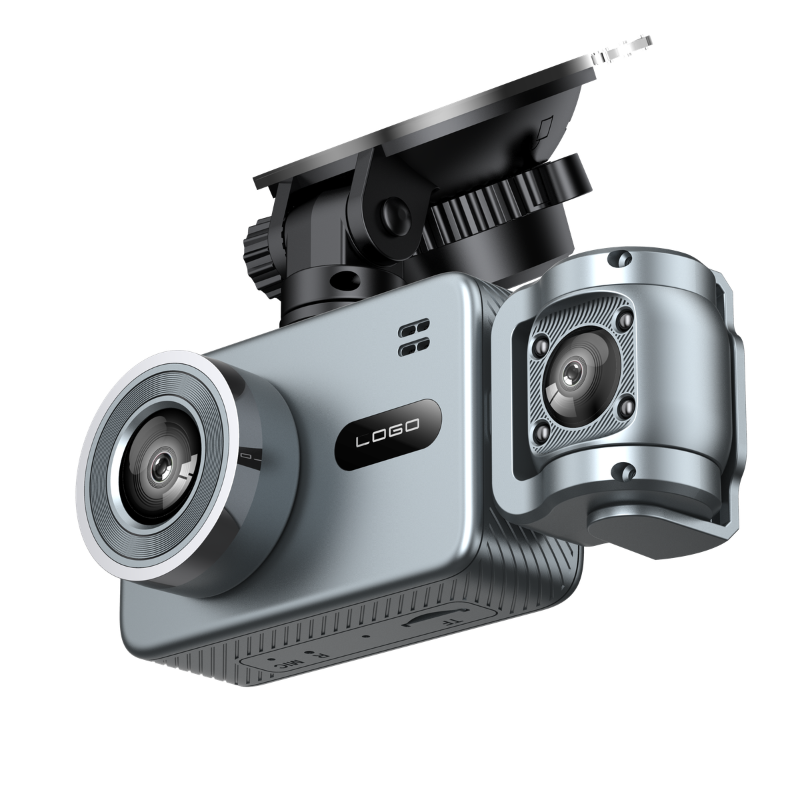
A fleet vehicle rarely has a single story to tell. A collision can start behind the vehicle, continue in front of it, and involve a passenger who was inside it. When that happens, the question a fleet manager asks is not how many cameras the product advertises — it is whether the views they actually need were recorded on the same timeline.
This guide is written for fleet operators, taxi and ride-hailing businesses, delivery and logistics companies, bus and passenger transport operators, fleet technology providers and automotive electronics distributors. It covers what a multi-channel dashcam for fleet vehicles can record, how to match a camera configuration to a vehicle type, which specifications deserve scrutiny, and what to verify with a manufacturer before a fleet-wide order is placed. Product-specific details are limited to Yuaoheng models and come from current product documentation; everything else is general procurement guidance.
Why Multi-Channel Dashcams Matter for Fleet Vehicles
A single front-facing camera answers one question: what happened in front of the vehicle. For a private car that is often enough. For a commercial vehicle it frequently is not, because the incidents a fleet has to reconstruct do not all happen in front of the bonnet.
A multi-channel dashcam for fleet vehicles records several areas at once — the road ahead, the vehicle rear, the cabin and interior, and side areas where the vehicle layout makes them worth covering. Driver activity may also be recorded where the operation calls for it. The advantage is not prestige, it is information: several synchronised views usually explain more than one view repeated at higher resolution.
More cameras do not automatically produce better fleet management. Extra channels add cost, cabling, mounting work, storage load and installation hours, and a badly chosen fourth camera can add nothing the operator will ever review.
The appropriate configuration depends on vehicle type, business model, operating environment, monitoring objectives, installation requirements and budget.
What Is a Multi-Channel Dashcam?
A multi-channel dashcam uses one recorder with several camera inputs. Each input records a different view at the same time, and the recordings are stored together so that the views share a common timeline. That shared timeline is the practical difference between a multi-camera dashcam system and a collection of separate devices: when an event is reviewed, the channels can be read against each other rather than as unrelated files.
Dual-Channel
Two cameras, most commonly the road ahead and the vehicle rear — the two directions in which most impact claims arise.
Triple-Channel
Three cameras, typically the road ahead, the cabin and the vehicle rear. The cabin channel is what separates this configuration from a dual-channel system, and it is why triple-channel products appear so often in passenger-carrying operations.
Four-Channel and Other Configurations
Additional channels are used where broader vehicle coverage is required — longer vehicles, split cargo areas, or projects where side coverage has been identified as a requirement. Not every fleet needs four or more cameras, and a configuration the operator will never review simply adds cost and installation time. Channel count alone does not determine suitability either; resolution, lens angle, storage and installation have to be evaluated together, as covered in our guide to dual channel vs triple channel dashcam configuration.
Match the Camera Configuration to the Fleet Vehicle
The most common procurement mistake is choosing a channel count once and applying it across a mixed fleet. Working from the vehicle outward is more reliable than working from a catalogue inward.
Passenger Vehicles
Front and rear recording cover the two directions relevant to most claims. Cabin monitoring can be added where a vehicle is used for company business with multiple drivers.
Taxis and Ride-Hailing Vehicles
These usually need the front road view, the cabin and passenger area, and a rear view. Cabin recording can be relevant to business and safety requirements, including disputes about what took place inside the vehicle during a journey. Regulation varies considerably, however: privacy and recording rules differ between markets, and requirements for signage, consent or data handling are not uniform. Businesses planning cabin recording should confirm the applicable local privacy and recording laws for each market they operate in before specifying the product.
Delivery and Logistics Vehicles
Front road recording, the vehicle rear, and a driver or cabin view where appropriate. Rear coverage is frequently under-specified in this segment even though reversing and loading-area incidents are a common source of claims.
Buses and Larger Commercial Vehicles
Larger vehicles may require broader camera coverage depending on vehicle layout and project requirements. Length, seating configuration, door positions and the presence of a passenger aisle all affect where a camera can usefully be mounted, so a coverage plan drawn up for a car cannot be scaled up directly.
Key Specifications Fleet Buyers Should Evaluate
Camera Resolution
Resolutions in this category range from 4K and 2K down to 1080P and 720P. Not every channel needs the same resolution: a system may use a higher-resolution forward camera where distance and detail matter most, while cabin and rear channels use lower resolutions adequate for their purpose. That keeps the bill of materials proportionate to what each view has to prove. As verified examples from Yuaoheng product documentation, the D3-1 dual-channel model records a 4K front channel with a 2K rear channel, while the S2Q three-channel model uses a 2K front camera with two 720P auxiliary cameras for the cabin and rear.
Lens Field of View
Field of view should be judged channel by channel rather than as a single headline number. The front camera usually needs the widest view, the cabin camera must cover the passenger area from its mounting point, and the rear camera has to see the traffic behind. Vehicle dimensions and mounting position both affect the result. A wider field of view is not automatically better either: widening a lens reduces the detail captured at distance, so a very wide front camera can make a number plate further up the road harder to read.
Night Vision and Low-Light Recording
Fleet vehicles work night shifts, park in unlit yards and drive on poorly lit roads, so low-light performance is a working requirement rather than a premium feature. The cabin channel deserves particular attention, since interiors at night are difficult for every camera. Fleet buyers should evaluate sample footage recorded in conditions close to their own operation rather than relying on marketing descriptions alone.
G-Sensor and Event Recording
A G-sensor detects sudden changes in motion and can flag or protect the recordings associated with an impact event. In a fleet context this marks the file that matters so it is not overwritten by routine driving, and it gives the reviewer a starting point in hours of footage. Buyers should confirm how event files are protected, how loop recording interacts with them, and whether a manual emergency recording button is available. These functions should not be sold as guaranteed accident evidence: they protect and index recordings, and whether a recording supports a claim depends on what the camera could see at the time.
Parking Monitoring
Parking monitoring is relevant where vehicles are left unattended in shared yards, customer sites or on-street locations. Where a project requires it, check how the parking mode is triggered and powered, whether motion detection and impact detection are both available, how long recording continues, and what happens to the vehicle battery. Parking-monitoring functions are not identical across every model and should be verified for the specific model under consideration.
Storage and Data Management for Fleet Dashcams
Memory Capacity
Multiple channels produce more video data than a single channel, so storage planning belongs in the procurement discussion rather than the installation phase. Buyers should confirm the memory card capacity the system accepts, how the recording resolution affects file size, the recording duration they can expect, and how loop recording and file segmentation are handled. In a fleet, the working figure is not how many hours fit on a card but whether the retention window covers the time it takes for an incident to surface. Both models referenced in this article support 16GB, 32GB and 64GB cards according to Yuaoheng product documentation.
Data Retrieval
How footage is retrieved shapes how quickly a fleet can respond to an incident. Common approaches include removing the memory card and reading it on a computer, transferring files over Wi-Fi, and accessing recordings through a mobile app. Only the methods actually supported by the selected product can be relied on, and the method should be workable for the people who will use it.
Data Retention
Retention is an operational decision with a regulatory dimension. Fleet operators should determine how long video should be kept based on their own requirements and the regulations that apply to them, then confirm the storage configuration can hold that window before overwriting begins.
Connectivity Features Fleet Buyers Should Consider
Connectivity is where product brochures and fleet expectations most often drift apart, so it is worth separating two classes of product.
A dashcam with Wi-Fi records locally and lets a phone or tablet connect for settings, live preview and video download within range of the vehicle. Where GPS is included, recordings can carry location and speed data that help place an event. The footage lives on the card in the vehicle.
A connected fleet-monitoring solution is a different product category. It typically adds cellular connectivity, a cloud platform and management software, and is specified, priced and supported as a system rather than a dashcam. A dashcam should not be assumed to provide cloud fleet management unless the specific product is documented as supporting it. If remote visibility is a project requirement, state it to the manufacturer at the beginning rather than discovering the gap during installation. Yuaoheng product documentation lists Wi-Fi for both the S2Q and the D3-1, and GPS for the D3-1.
Installation and Power Requirements
Installation is where a configuration decision becomes a labour cost, and it deserves to be evaluated before the product is selected rather than after.
The number of cameras determines how much cable has to be routed through the vehicle. Cable routing, camera mounting locations, rear-camera installation and cabin-camera installation each raise their own questions: where the cable can pass without interfering with trim or airbags, whether a mounting point survives vehicle vibration, and whether the cabin camera can see the passenger area without obstructing the driver's view or the mirror.
Power supply should be confirmed for the intended use, since continuous recording, parking monitoring and multiple cameras all draw on the vehicle supply. Both models referenced in this article are documented with a 5V-1.5A power interface and an operating temperature range of -20°C to +70°C, a relevant figure for fleets operating across different climates. For mixed fleets, consistency matters as much as the specification: a configuration that installs cleanly on one van but needs a different mounting solution on the next model complicates training, spares and quality control.
Reliability and Quality Control for Fleet Deployment
A fleet vehicle may run continuously through shifts and accumulate mileage far faster than a consumer car, so products specified for that environment should be evaluated on how consistently they perform over time.
Useful questions for a manufacturer cover the testing actually performed on the model being purchased: functional testing, camera and image testing, recording stability over extended periods, power testing, storage testing, and GPS or Wi-Fi testing where those features are included. Buyers should also ask what pre-shipment inspection covers.
A manufacturer's full product range should not be treated as evidence about one model. Buyers should evaluate the actual model intended for fleet deployment and ask for the test results and inspection standards that apply to it specifically.
Dual-Channel vs Triple-Channel vs Multi-Channel Fleet Systems
For procurement purposes the groups can be summarised as follows. This is a starting point for matching coverage to vehicle type, not a ranking.
| Configuration | Typical Coverage | Potential Fleet Applications |
|---|---|---|
| Dual channel | Front + rear | Commercial vehicles, standard fleet monitoring |
| Triple channel | Front + cabin + rear | Taxi, ride-hailing, passenger transport |
| Four channel and above | Multiple vehicle areas | Larger or specialised fleet applications |
No configuration in this table is universally better than the others. The right one depends on the fleet's monitoring objectives and the layout of the vehicles it operates. The full category is listed on the dashcam systems product page when building a shortlist.
Yuaoheng Multi-Channel Dashcam Examples
The two models below show how different configurations serve different fleet requirements. Specifications are quoted from Yuaoheng product documentation for these models.
S2Q: A Triple-Channel Example
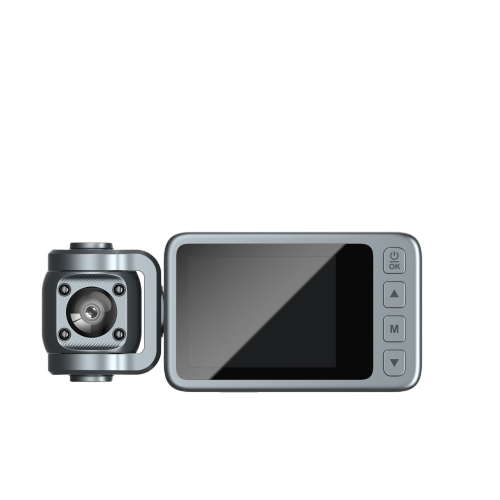
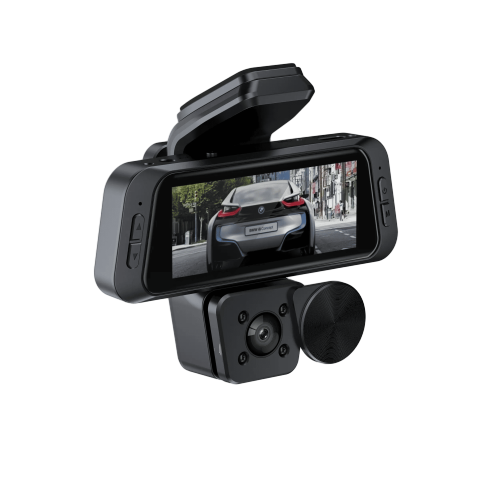
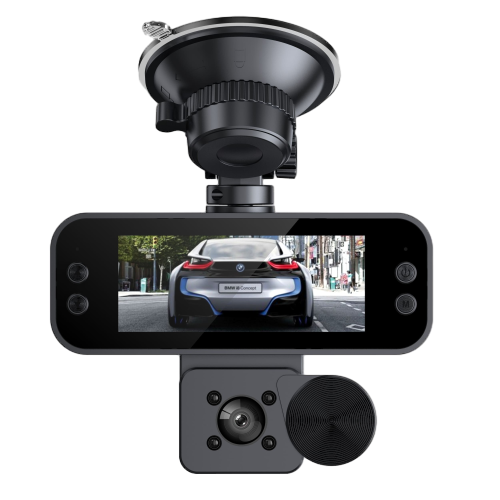
The S2Q is a three-camera system: a 2K front camera recording at 2560×1440, with two 720P auxiliary cameras for the cabin and rear. The three lenses are documented at 110°, 80° and 60°, reflecting the different coverage each position needs. The unit has a 2.0-inch IPS display and supports Wi-Fi, loop recording, parking monitoring, a G-sensor and motion detection, with 16GB, 32GB and 64GB memory card options. It is a useful reference for taxi, ride-hailing and passenger transport projects where the cabin has to be part of the recording.
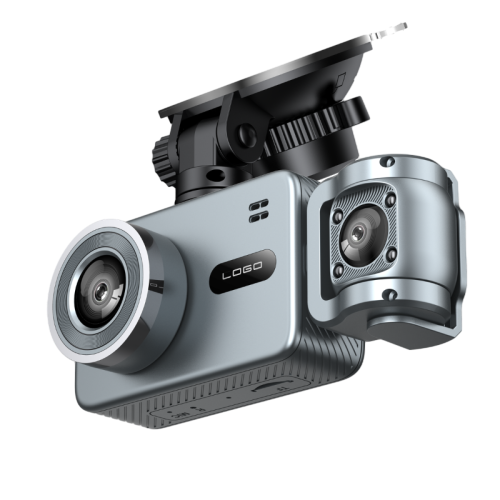
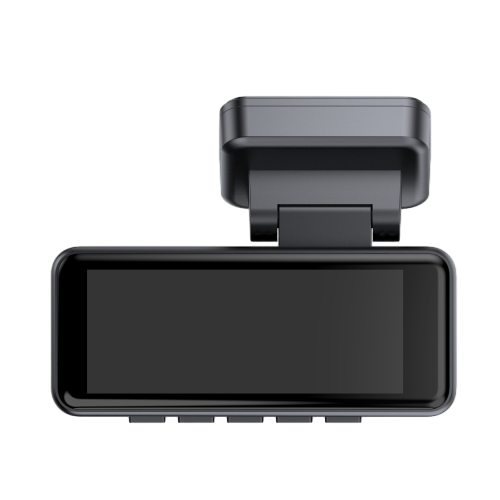
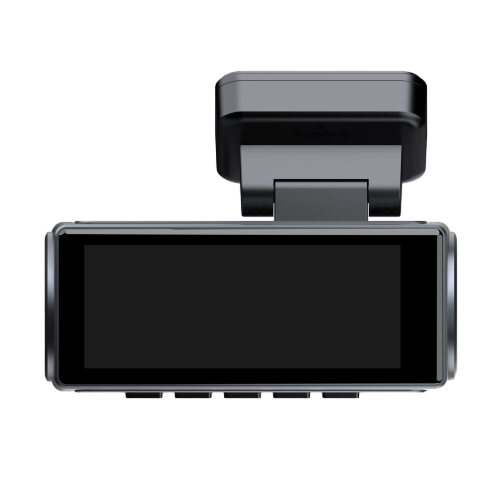
S2Q three-channel dashcam — 2K front with two 720P auxiliary cameras. View S2Q specifications
D3-1: A Dual-Channel Example
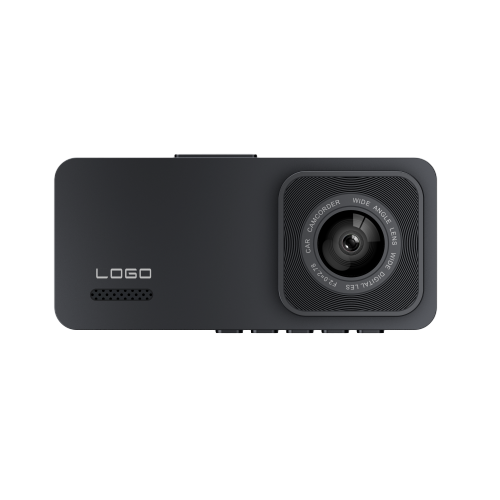
The D3-1 is a two-camera system built around a 4K front channel recording at 3840×2560 at 30fps and a 2K rear channel, with lens angles of 150° and 110°. It adds GPS alongside Wi-Fi, a 3.16-inch IPS display, loop recording, parking monitoring, a G-sensor and motion detection, with the same 16GB, 32GB and 64GB card options. For fleets whose claims arise mainly on the road ahead and behind the vehicle, this is the configuration that matches the requirement.
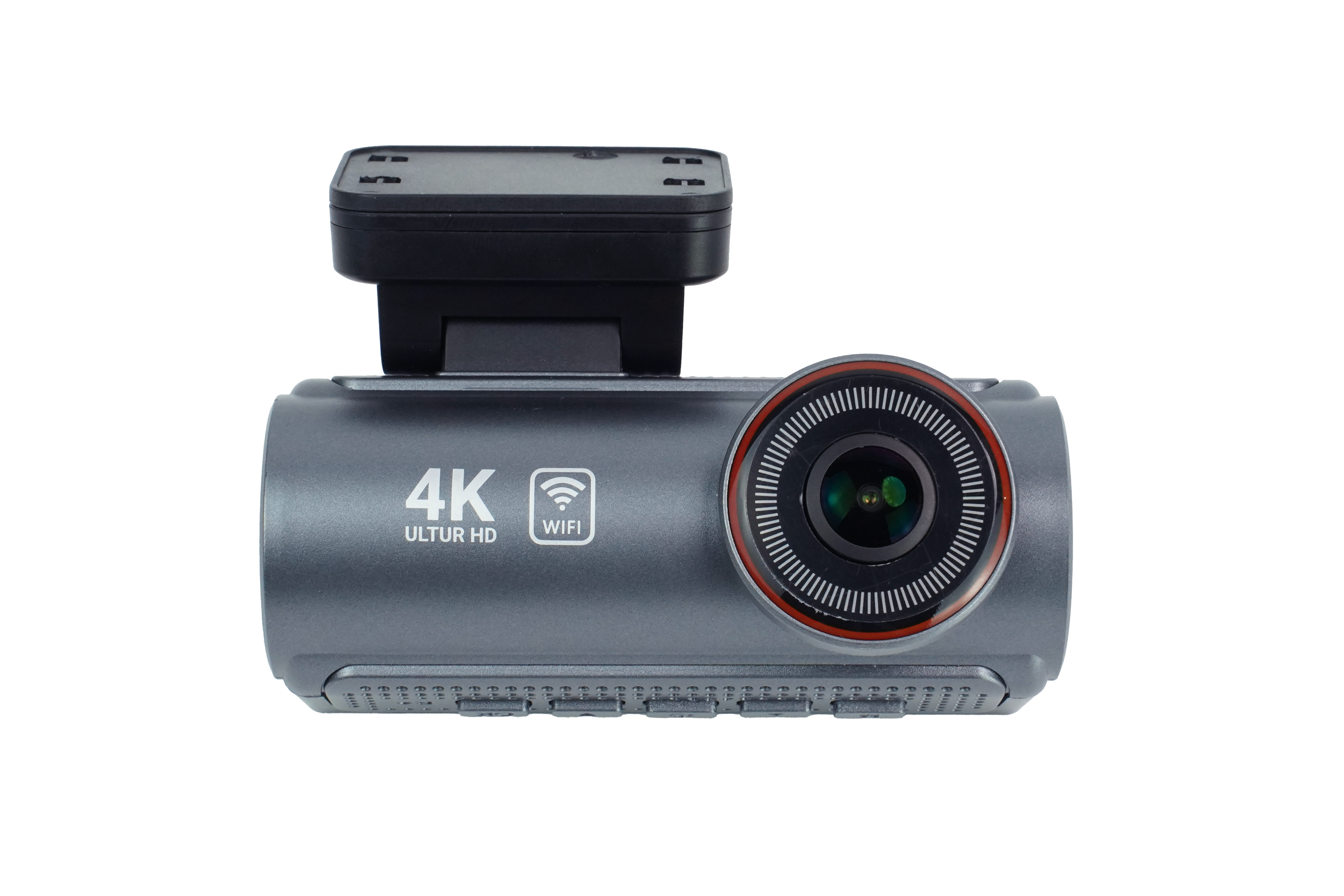
D3-1 dual-channel dashcam — 4K front with a 2K rear channel and GPS. View D3-1 specifications
These two products illustrate the range rather than a recommendation. Configurations and specifications should be confirmed against current documentation for the model under consideration before a project is finalised, since features can differ between models in the same family.
What Should Fleet Buyers Ask a Dashcam Manufacturer?
A structured list of questions shortens the evaluation process and exposes gaps early. The following set can be sent to a supplier before samples are requested.
- What multi-channel configurations are available?
- Which camera views can be customised for a specific project?
- What resolutions are available for each channel?
- What lens angles are available, and how were they chosen for each position?
- How is video stored, and how are files segmented and overwritten?
- What memory capacity is supported, and what recording duration does that provide?
- Does the system support GPS?
- Does it support Wi-Fi or mobile app connectivity?
- What parking-monitoring functions are available on this model?
- What quality-control and testing procedures are applied to the model?
- Can samples be provided before fleet deployment?
- What OEM/ODM customisation options are available?
- Can the manufacturer support different vehicle installation requirements across a mixed fleet?
The same ground is covered from a supplier-evaluation angle in our guide to choosing a reliable dashcam manufacturer, which is worth reading alongside this checklist.
OEM/ODM Opportunities for Fleet Dashcam Projects
Fleet programmes often need more than a standard product. Automotive electronics brands and fleet technology providers may require logo and packaging customisation, housing changes to fit a vehicle or mounting position, hardware and firmware adjustments, or a different camera configuration from the standard range. Where the requirement sits outside an existing model, product-specific development may be necessary.
Yuaoheng's OEM/ODM services cover customisation from branding on an existing platform through to development based on drawings or supplied samples, depending on how far a project needs to move from the reference model. For fleet work, the practical starting point is the vehicle list and the coverage requirement, because those two inputs determine whether a standard configuration will do.
Planning a multi-channel dashcam programme for your fleet?
Share your vehicle type, the camera coverage you need, your target market and your product specifications. The Yuaoheng team will review the requirement, recommend a suitable camera configuration and discuss the sample and customisation options available.
Conclusion: Specify the Coverage, Then Choose the Camera
Choosing a multi-channel dashcam for fleet vehicles comes down to a short list of decisions: vehicle type, the camera coverage the operation needs, the resolution required for each channel, the field of view that makes that resolution useful, low-light performance, how much footage has to be retained and how it will be retrieved, the connectivity the project depends on, how installation will be carried out across the vehicle list, the quality control applied to the model, and whether OEM or ODM work will be needed.
Work through those decisions before requesting samples, and the configuration question usually answers itself. Looking for a multi-channel dashcam solution for your fleet or automotive brand? Contact Yuaoheng to discuss your required camera configuration, product specifications and customisation needs.
.jpg?imageMogr2/format/webp)