.png?imageMogr2/format/webp)






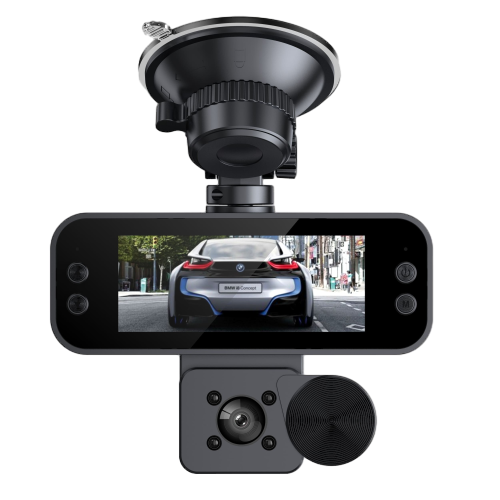

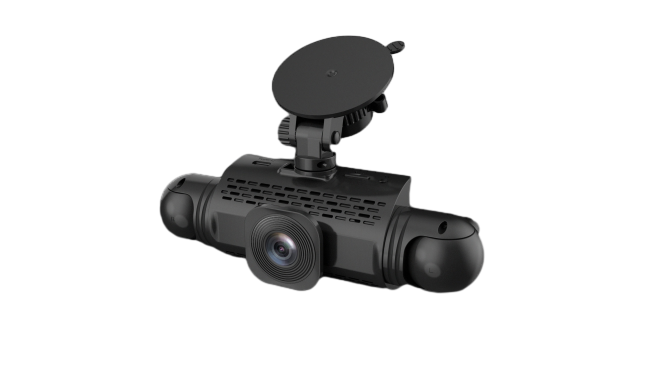
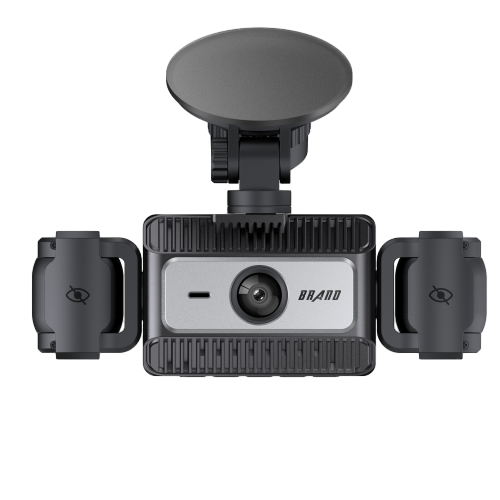
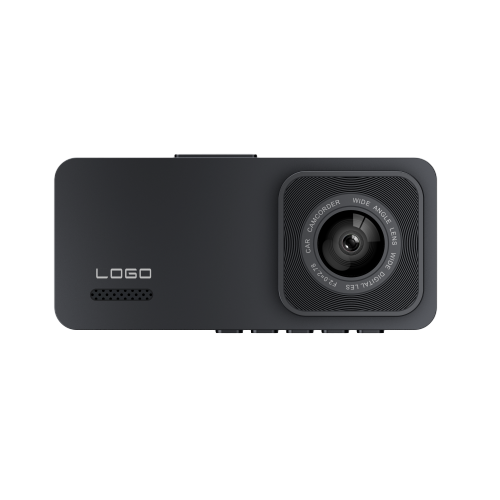
Two dashcams can sit on the same shelf at a similar price and still solve completely different problems. One records the road ahead and the traffic behind the vehicle; the other also watches the cabin. For a brand deciding what to develop, that difference is not a specification detail. It decides the target market, the bill of materials, the installation effort and the story printed on the packaging.
This guide compares dual channel and triple channel dashcams from a product-selection point of view. It explains what each configuration records, which applications each one suits, how they differ in coverage, storage and installation, and how a brand can move from an application requirement to a camera configuration that can actually be manufactured. It is written for fleet operators, taxi and ride-sharing companies, delivery fleets, commercial vehicle operators and automotive accessory brands that need to settle the configuration question before they approach a supplier.
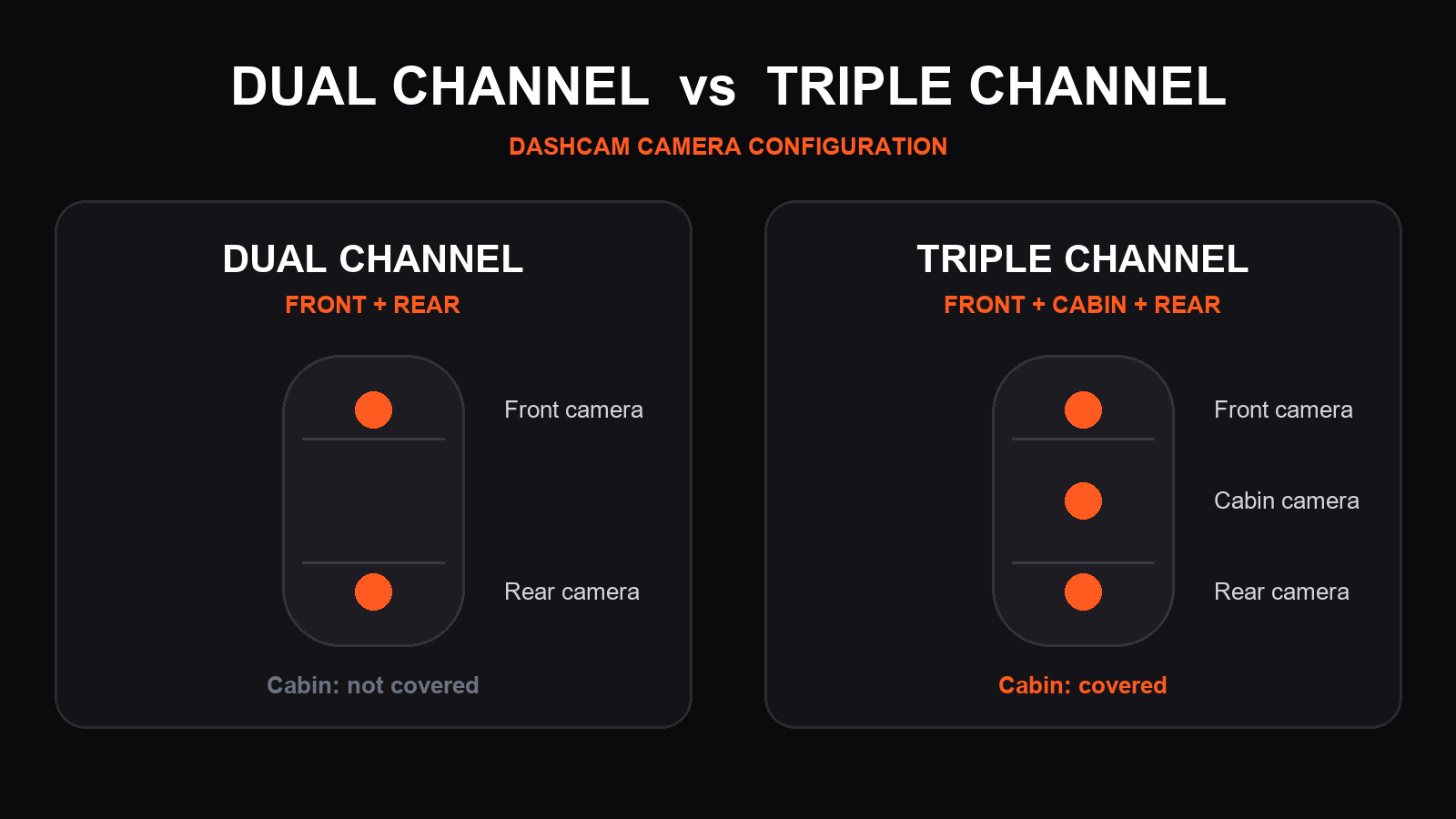
A dual-channel dashcam records the front and the rear; a triple-channel dashcam adds a cabin camera to the same recording session.
Why Dashcam Channel Configuration Matters for B2B Buyers
When a company buys dashcams in volume, the first decision is rarely the brand or the price. It is how many views the vehicle actually needs to record. Buyers usually choose between single channel, dual channel, triple channel and multi-channel systems, and the number of channels drives almost everything that follows.
Channel count changes recording coverage, hardware configuration, storage requirements, installation work, unit cost and application suitability. A configuration that is right for a private car is often wrong for a taxi, and a configuration that suits a taxi may be unnecessary for a long-haul truck. For fleet operators, taxi companies, ride-sharing businesses, delivery fleets, commercial vehicle operators and automotive accessory brands, the useful question is therefore not which configuration is best in general, but which configuration matches the evidence the operator actually expects to need.
Treating the channel count as a score — more means better — leads brands into two predictable mistakes: paying for coverage that no customer will ever use, or saving on a configuration that cannot answer the question the buyer will ask after an incident.
What Is a Dual Channel Dashcam?
A dual channel dashcam records two views simultaneously. The most common arrangement is a front camera and a rear camera, both written to the same memory card and managed by a single processor, so the two files stay synchronised in time. Some dual-channel platforms put the second camera inside the cabin instead of at the rear, but in most retail and commercial programs the front-and-rear layout is the default.
The value of a dual configuration comes from what each camera is responsible for.
The Front Camera
The front camera carries the primary evidence. It records road conditions, traffic events, vehicles ahead, traffic signs and licence plates. In most disputes, from a rear-end collision to a disputed lane change, the front channel is the view that establishes what the driver was facing and how the vehicle was being driven at that moment.
The Rear Camera
The rear camera answers the opposite question. It records rear impacts, tailgating, vehicles approaching from behind and rear traffic incidents — the incidents that a front-only camera misses entirely, and the ones that are hardest to reconstruct afterwards without footage. Together, the two channels give a continuous record of what happened in front of and behind the vehicle.
What Is a Triple Channel Dashcam?
A triple channel dashcam adds a third camera. The standard structure is front, cabin and rear, which means the system covers the road ahead, the interior of the vehicle and the space behind it at the same time. The cabin camera is what separates a triple-channel system from a dual-channel one, and it is also what makes the configuration relevant to a different set of customers.
Front Channel
The front channel records the road and forward-facing incidents, exactly as it does on a dual-channel system. It remains the primary view for road evidence, traffic events and licence plate capture.
Cabin Channel
The cabin channel records the interior: passengers, the driver, and activity inside the vehicle. This is the channel that matters when the operation involves people rather than only traffic — when a passenger claim, a driver behaviour question or an interior incident has to be reviewed after the fact.
Rear Channel
The rear channel continues to cover what happens behind the vehicle, so a triple-channel system protects the front, the interior and the rear in one recording session on one storage device.
Ride-sharing, taxi and fleet operations are the classic users of this layout, because those businesses need to know what happened on the road and inside the vehicle. A working example from the current dashcam systems range is the S2Q, a three-channel platform specified as a 2K front camera with 720P cabin and 720P rear cameras, 110°, 80° and 60° lens coverage, a 2.0-inch IPS display and built-in Wi-Fi. It shows how a triple-channel product can be defined without making every channel equally expensive.
"The right configuration is not the one with the most cameras. It is the one that records the evidence the operator will actually need to look at."
Dual Channel vs Triple Channel Dashcam: Key Differences
Once the coverage of each configuration is clear, the comparison becomes practical. The table below summarises the differences that matter most to a B2B buyer: what each configuration records, how much work it takes to install, how it is typically positioned in the market, and where each one fits.
| Aspect | Dual Channel | Triple Channel |
|---|---|---|
| Typical coverage | Front + rear | Front + cabin + rear |
| Vehicle interior | Usually not covered | Covered |
| Road coverage | Front + rear | Front + rear |
| Passenger monitoring | Limited or not available | Yes, depending on configuration |
| Installation complexity | Lower | Higher |
| Storage demand | Lower | Higher |
| Hardware configuration | Simpler | More complex |
| Typical applications | Private vehicles, commercial vehicles without cabin monitoring | Taxi, ride-sharing, passenger transport, fleet programs with interior requirements |
One caution belongs with this table. Channel count alone does not determine product suitability. Buyers should evaluate camera resolution, lens angle, storage, installation requirements and the intended application together, because a well-specified dual-channel product can be a better commercial choice than a poorly configured triple-channel one, and the reverse is equally true.
Which Applications Are Better Suited to Dual Channel Dashcams?
Dual-channel systems are not a compromise version of a triple-channel product. They are the correct answer for a large share of the market, especially where the requirement stops at the vehicle boundary.
Private Vehicles
For a private car, the requirement is usually front and rear recording: what happened ahead, and what happened behind. Cabin coverage has little practical value in a single-owner vehicle, so a dual-channel product with good resolution on both channels is a better use of the budget than a third camera that records an empty cabin.
Commercial Vehicles Without Cabin Monitoring
Many commercial vehicles carry goods rather than passengers. For those operations, the evidence that matters is road incidents, rear impacts and driver protection. When there is no passenger claim to review and no interior activity of interest, a dual-channel configuration covers the operational requirement without adding hardware the operator will never use.
Cost-Sensitive Product Lines
For a brand building a range across several price bands, a dual-channel platform is often the entry and mid-tier workhorse. A simpler camera configuration can help brands develop products for cost-sensitive market segments, depending on the overall hardware design, the resolution chosen for each channel and the connectivity features included. The savings come from the configuration as a whole, not from one component in isolation.
Which Applications Benefit From Triple Channel Dashcams?
Triple-channel systems come into their own when the vehicle is not only moving through traffic but also carrying people, and when the interior is part of what the operator needs to be able to review.
Taxi and Ride-Sharing
A taxi or ride-sharing vehicle records the road, the cabin and the rear in one session. That combination is the standard requirement in this segment, because disputes can involve traffic, passengers or both. It is the reason most three-channel platforms are positioned towards ride-sharing and fleet management rather than towards private buyers.
Delivery and Commercial Fleets
Fleet operators may need three kinds of evidence at the same time: road evidence for traffic incidents, driver and cabin recording for behaviour and safety review, and rear recording for incidents behind the vehicle. A triple-channel configuration collects all three within one installation instead of requiring two separate devices.
Passenger Transport
Where passenger activity is part of operational management and safety, interior footage has a practical role. Minibuses, shuttles and small passenger vehicles are typical cases where the cabin view is not an extra feature but part of the specification.
Insurance and Incident Review
Multi-angle video can provide additional visual evidence when an incident is reviewed. It adds context that a single view cannot supply — what the driver faced, what the passenger did and what approached from behind — but it should be positioned honestly. Additional footage supports a review; it does not by itself determine its outcome.
Compare the D3-1 Dual Channel Dashcam With the S2Q Triple Channel Dashcam
The difference between the two configurations is easier to judge on real products than on a feature list. The two platforms below are both current models in the range, and each one represents a different answer to the same question.
D3-1: A Dual Channel Example
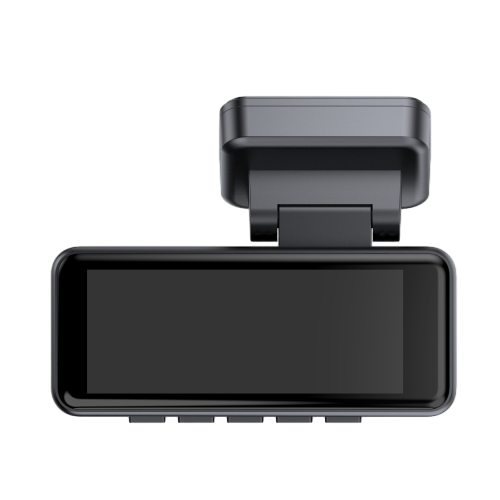
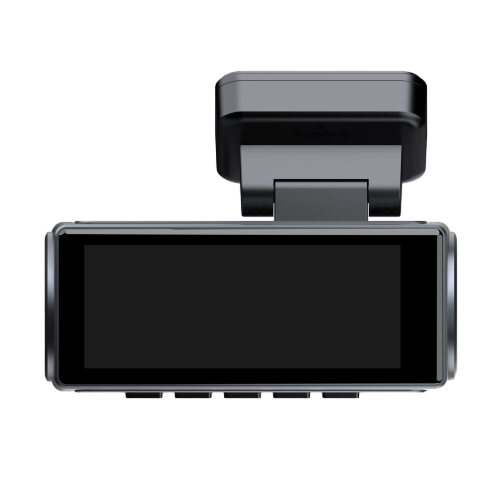
The D3-1 is a front-and-rear dual-channel model. Its specification lists a 4K front channel and a 2K rear channel, with a video resolution of 3840×2560 at 30fps. The front lens is 150° and the rear lens is 110°, so the wider angle sits with the camera that has to capture road detail and plates. It carries a 3.16-inch IPS display, Wi-Fi and GPS, together with loop recording, parking monitoring, a G-sensor, motion detection and night vision, and it accepts 16GB, 32GB or 64GB memory cards.
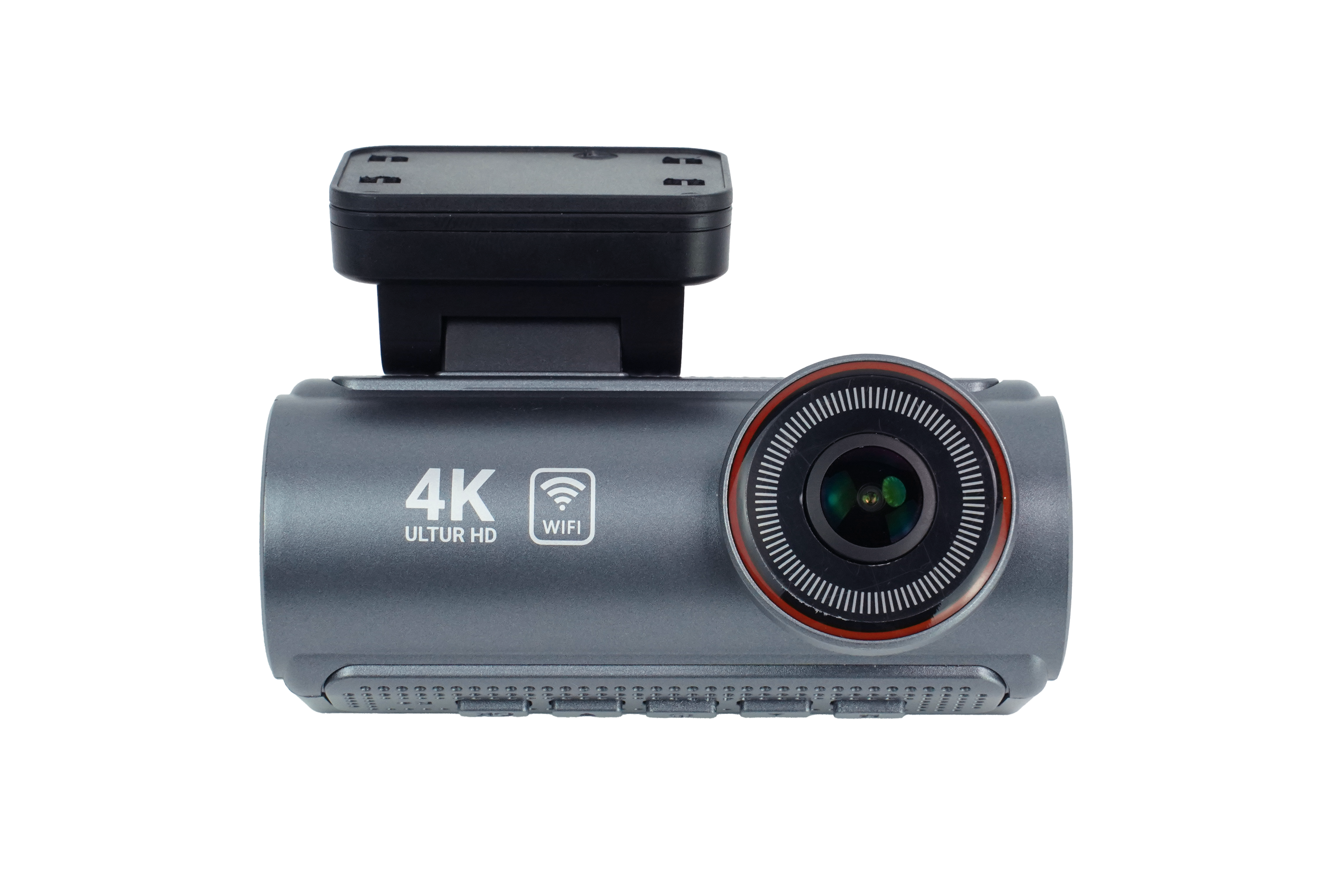
D3-1 dual-channel platform: a 4K front channel and a 2K rear channel, with Wi-Fi and GPS built into the housing.
S2Q: A Triple Channel Example
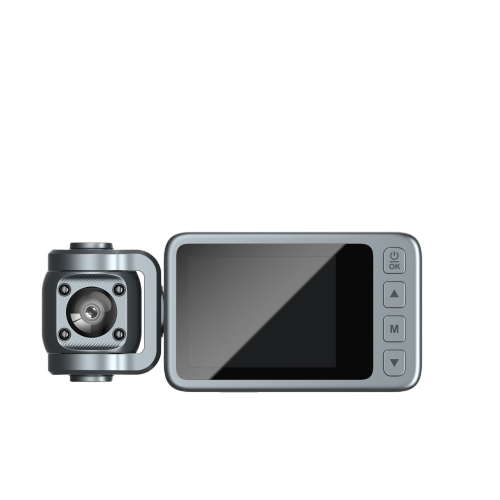
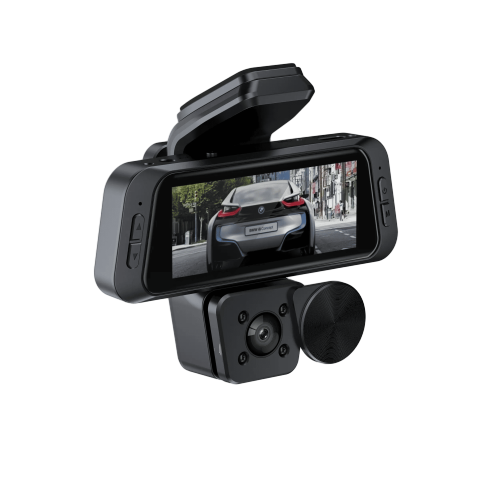
The S2Q is a three-channel model. Its specification lists a 2K front camera with a 720P cabin camera and a 720P rear camera, a video resolution of 2560×1440, and lens coverage of 110° for the front, 80° for the cabin and 60° for the rear. It uses a 2.0-inch IPS display and built-in Wi-Fi, and it supports night vision, loop recording, parking monitoring, a G-sensor and motion detection, with 16GB, 32GB or 64GB memory card options.
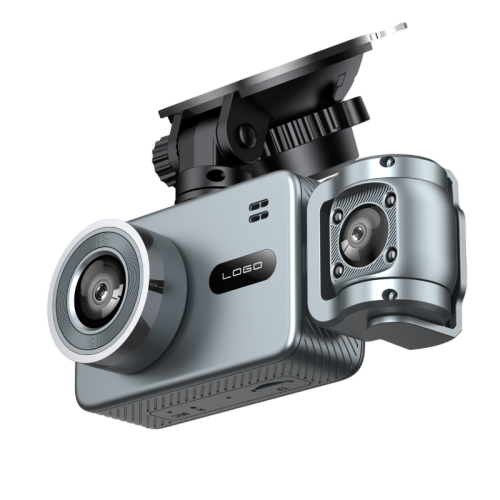
S2Q triple-channel platform: front, cabin and rear channels recording together, with the third view dedicated to the interior.
The comparison is not that one product is stronger than the other. The D3-1 concentrates its resolution on two channels, which suits buyers who need the clearest possible road and rear evidence. The S2Q spreads its channels across three views, which suits buyers who need to know what happened inside the vehicle as well as around it. Those are two different market answers built on the same production base.
What Else Should Buyers Compare Besides Channel Count?
Channel count narrows the field, but it does not choose the product. Five further factors decide whether a configuration is practical in the field and repeatable in production.
Video Resolution
Resolutions of 4K, 2K, 1080P and 720P can all appear in a product line, and not every channel needs the same resolution. A common and sensible approach is to give the front channel the highest resolution, because it captures the road, signs and plates, and to specify auxiliary cabin or rear cameras at a level that is still readable without carrying the cost of the primary channel. Buyers should confirm the resolution of each channel individually rather than a single headline number.
Lens Angle
Lens angle determines what a camera can actually see, and the angles are not interchangeable between positions. The D3-1 pairs a 150° front lens with a 110° rear lens; the S2Q uses 110° front, 80° cabin and 60° rear. A narrower cabin or rear angle is often deliberate, because it concentrates detail where the camera is aimed instead of stretching it across a wide frame.
Storage Requirements
A multi-channel system can generate more video data, so storage capacity and recording settings should be evaluated accordingly. Buyers should confirm the supported memory card capacity, the recording format, loop recording behaviour, file segmentation and how the oldest files are overwritten. Both configurations in this comparison support 16GB, 32GB and 64GB cards, which gives a brand a clear range to specify against the expected recording duration.
Power Consumption
Several cameras working at once place a different load on the vehicle's power system than a single camera does. The vehicle power supply, continuous recording, parking monitoring and any battery backup should be checked as a set, since parking mode in particular keeps the system active while the engine is off.
Installation
Installation is where configuration differences become visible to the end customer. The number of cameras, cable routing, camera mounting positions, the cabin camera position and the rear camera run all affect how long a fitting takes and how clean the result looks. For a B2B brand, installation complexity is not an internal detail: it changes warranty conversations, support requests and the reviews a product receives.
How Should Brands Choose Between Dual and Triple Channel?
The decision can be reduced to two short lists, drawn directly from the applications above.
- Front and rear coverage is the primary requirement.
- Cabin monitoring is not necessary for the application.
- The product needs a simpler camera configuration.
- The target market focuses on standard vehicle protection.
- Cabin monitoring is required.
- The product targets taxis or ride-sharing vehicles.
- Fleet operators need interior and rear visibility.
- Passenger or driver activity is relevant to the project.
The recording objectives of the product decide the configuration, not simply the number of cameras a competitor has launched. A brand that starts from the application and works backwards to the camera layout usually needs fewer iterations before sample approval.
What Should B2B Buyers Ask a Dashcam Manufacturer?
Once the configuration is defined, the next step is confirming that a supplier can actually deliver it consistently. If you have not yet narrowed down the supplier side, our guide to choosing a reliable dashcam manufacturer covers that process in full. For the configuration itself, these are the questions worth putting in writing:
- What camera configurations are available in the platform?
- Can the front, cabin and rear cameras use different resolutions?
- What lens angles are available for each channel?
- How are the channels recorded and stored?
- Does the system support Wi-Fi or app connectivity?
- Is GPS available, and what data does it record?
- What parking monitoring functions are supported?
- Can the camera configuration be customized?
- Can the manufacturer provide samples for evaluation?
- What OEM and ODM options are available?
Can Dual and Triple Channel Dashcams Be Customized for Different Brands?
Yes, and in this category the camera configuration is itself a customization decision. A brand can build a range in which the same platform serves a dual-channel retail product and a triple-channel fleet product, differentiated by the camera set rather than by two unrelated designs.
Typical customization options include logo, packaging, camera configuration, housing, firmware, hardware and product appearance. Our four levels — light customization, drawing-based, sample-based and full scale customization — are set out on the OEM/ODM services page, and they let a brand start from a logo and a box on an existing model or develop a new housing from drawings and samples, depending on how far the product needs to move from the reference platform.
Not sure whether your project needs two channels or three?
Tell us the application, the vehicles involved and the evidence you expect to need. Our technical team will recommend the appropriate camera configuration and the platform it can be built on.
Conclusion: Choose the Dashcam Configuration That Fits Your Project
Dual channel and triple channel dashcams serve different recording requirements. A dual-channel system covers the front and the rear, which is what most private vehicles and many commercial vehicles need. A triple-channel system adds the cabin, which is what taxi, ride-sharing, passenger transport and fleet programs need when the interior is part of the operational picture.
Neither configuration is a higher grade of the other. If you are developing a dashcam product for your brand, Yuaoheng can help you evaluate the appropriate camera configuration based on your target market, your application and your customization requirements — and then build it on a platform that already exists.
.jpg?imageMogr2/format/webp)